
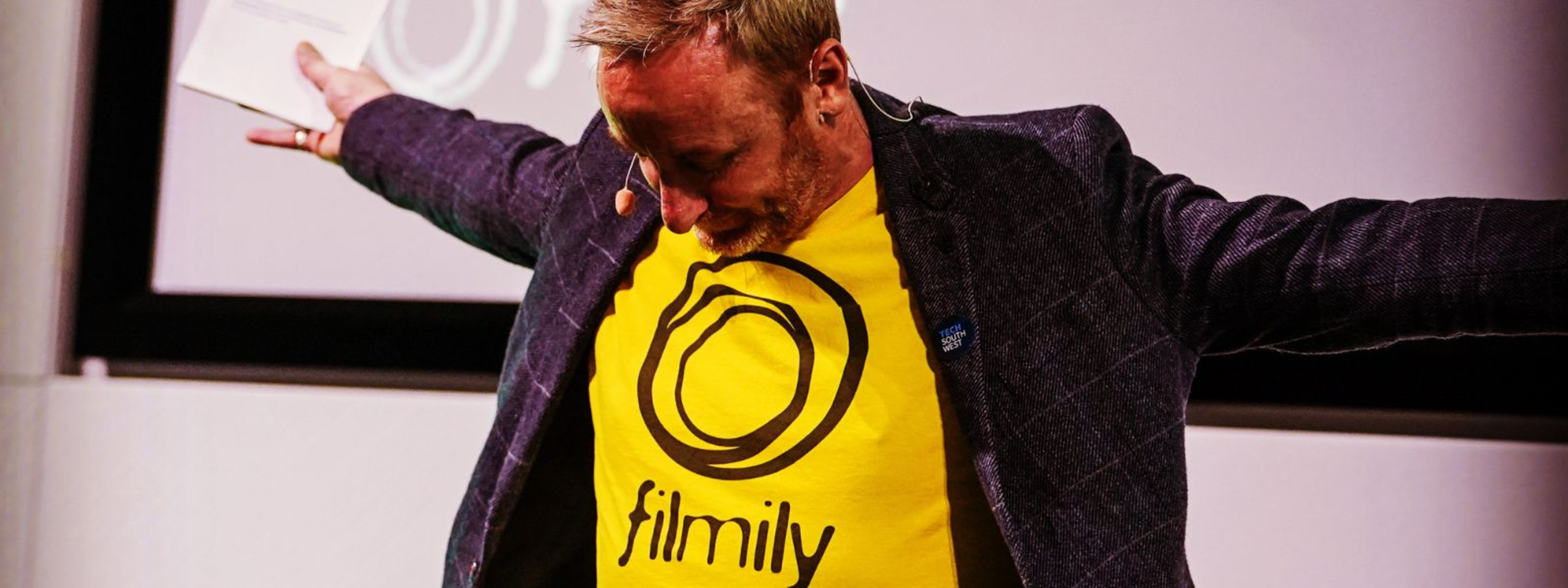
How one AI-based company played the game right!
Starting any business always comes with its own set of challenges, usually involving funding – but sometimes unforeseen events happen that can create major problems for fledgling ventures. Founder of AI firm Filmily, Andy Doyle, knows only too well about this. He spoke to us about his company and how he successfully navigated through a particularly tricky time shortly after its launch.
Q: In a nutshell, explain what Filmily does?
A: Filmily is basically a fan engagement platform, but there’s two parts. The first involves the fan’s experience. For example, one of our biggest clients is Manchester City, and they have their own app and infrastructure – so Filmily is integrated into that infrastructure. A fan goes on the Man City app and chooses to take a selfie, say at a Champions League game; as soon as they do it, it uploads to us. The fan then gets the image back branded with the Man City crest and Champions League trophy. So, for the fan, the software has allowed them to create content – and this is key – to get something back to the fan.
The second part is about data. For every image we collect about 75 bits of data. We know the handset, the location, how shaky the movement of the phone is; is it portrait or landscape – and we auto tag every item in that image. Also, we automatically extract every face from an image and can work out their age, gender and emotion, plus, any brand seen in the image is also extracted. All that data can then be used to create films, branded content, virtual tickets, mosaics for stadium screens etc. The client can then create a mosaic with, say for example 81 fans using a 9x9 image – with all the fans specified to be under 25, smiling and female – and they want them all to be wearing the club shirt. It will then filter that automatically and generate the content, and put it on social media.
Q: How did the company get started?
A: I was a software developer for a long time, then I worked in the backend of TV, dealing with a lot of content and video; the technical interactive side for big programmes like Big Brother and Who Wants to Be a Millionaire? Then from that, I worked for other TV companies; helping with the first version of the iplayer, and helped build a streaming service for HBO, it was all about coding, transferring video and making interactive content. After the crash in 2008, I started my own business – an agency – doing technical event-based websites, and from that, I acquired a couple of other companies, and this is now the Nice Group, here in the South West.
During this time, this idea literally popped into my head for Filmily. It was different then to what we do now, this was going to be around weddings and collecting guests’ videos for the bride and groom. As I had a development team in my company, I started building prototypes but then we realised the B2C wedding market would be really difficult because you would need about a million dollars for marketing. So we then thought, if it was a B2B what would it be? And then, we looked at it and said if we can do this for 100 people at a wedding, why can’t we do it for 40,000 people in a stadium? Being developers, we saw it’s the same principle, we just need more servers and make it more scalable, so that’s what we focused on and that’s how Filmily came about.
Q: What was the funding side of things like?
A: When we started, I’d never got investment and everything was bootstrapped. And then, almost by accident, I found out about Innovate UK. From there, it took two years to get the funding because we had applied a couple of times and got turned down – it was a learning curve – and when we got the grants, we match-funded it within six weeks and had approximately £530k which took us through to the launch.
Q: Did you experience any problems when starting out?
A: Well, we launched in early February 2020, and then six weeks later the pandemic hit so that wasn’t good. All of our pipeline work we had built up got cancelled within a month; we went from £2million to £1,500 in four weeks. Luckily, we had some money in the bank, and then a funny thing happened. Up to that point, all our conversations were saying ‘Nobody cares about fans who don’t go to stadiums’, and when the pandemic hit everyone went ‘Oh my God!, what about all the remote fans?’, which makes sense when you think about it because a top team like Real Madrid may have a captive audience in the stadium of around 100-150 thousand, but globally, it’s probably like 485 million.
So, during the first six months of the pandemic, we changed and added features to the platform so as to make it work with remote fans, and as a result, it’s a much stronger platform. Following this, we signed a contract with an American company called Wasserman – they are a billion-dollar sports, music and culture agency – and they paid us to work with some NFL teams. We were lucky as it kept us going.
Q: What future plans do you have for Filmily?
A: We want to do more support around digital tickets. There’s a standard that’s becoming more the norm now called Proof of Attendance Protocol (POAP) – it’s an idea from the States and this is all about storing and collecting digital tickets/mementos of events on an app – you know, like concerts or anything to do with sports.
If you’re thinking about finding investment for your new venture and you want to know more about how to present your plan, then check out our article on how to craft a compelling pitch deck – https://www.accesstofinancesw.co.uk/news/1674290.
And if you need help getting your innovative startup/SME off the ground, read our article on SETsquared https://www.accesstofinancesw.co.uk/news/1665790.
Another great organisation that’s worth your time is https://www.heartofswgrowthhub.co.uk/ – they offer free business advice and support services for startups and established businesses – covering Devon and Somerset.
If you’ve experienced unforeseen challenges with your business then let us know in the comments!